Health record
Every test at a glance
Breeding decisions rest on results, not on assurances. Every finding is listed here with its date. The complete original certificates, together with the names of the examining bodies, are sent on request.
Radiographic findings
Eyes
Neurology, metabolism and skeleton
Dentition and male characteristics
The genetic screening was carried out on 1 June 2026 from an EDTA blood sample taken by a veterinarian. Every breed specific condition included in the panel for the Australian Shepherd came back clear. The ophthalmologist certificate of 18 June 2026 is valid for twelve months, and no repeat patella examination was recommended.
Colour genetics & diversity
What Chase passes on
Merle status
At the M locus Chase carries Mc235/M268: one copy of the cryptic merle allele and one copy of the classic merle allele. He has no wild type copy, so every offspring inherits one of the two variants. A mating with a merle bitch is ruled out. Confirmed by laboratory testing on 5 June 2026.
The merle insertion is unstable in length. The allele can therefore change in length in the offspring, which means the coat pattern cannot be predicted precisely. Anyone planning a mating is best advised to discuss this with their own breeding warden.
Coat genetics
A locus
at/at
Black and tan
D locus
D/D
No dilution
E locus
E/E
No recessive red
K locus
ky/ky
A locus can express
B locus (Aussie)
B/B
Not a carrier of ba brown
S locus
S/S
No piebald, no white spotting
I locus
I/i
Carrier of phaeomelanin dilution
T locus
t/t
Normal tail length, no NBT
L1 locus
l/l
Long coat
Cu1 locus
Cu/Cu
Straight coat, no curl
IC locus
IC/IC
No furnishings
H locus
h/h
No harlequin
Genetic diversity
Coefficient of inbreeding
6.00 %
Breed average 5.44 % · calculated genomically across six generations
Heterozygosity
41.00 %
Breed average 38.75 % · higher values indicate greater genetic variety
Both figures come from a genomic diversity analysis. The full report is available to prospective breeders on request when planning a mating.
Temperament & daily life
What Chase is like to live with
Chase is a very level headed young dog with an affectionate character. He meets strangers in a friendly, good natured way without being pushy, and he is consistently devoted to the people he knows. His family means everything to him.
His herding and guarding instincts are pronounced. Chase is alert, notices any change in his surroundings at once and announces it, yet he remains responsive and easy to call back. His intelligence shows above all in how quickly he grasps a situation and how accurately he reads his people.
With other dogs Chase is self assured. He gets along very well with males of his own breed and finds common ground with them quickly. Living permanently alongside bitches, on the other hand, he finds wearing. Chase is a dominant male, and that belongs in an honest picture of him. For stud work this has one practical consequence: I prefer to travel to the bitch rather than have her stay in his home territory for days. It is more relaxed for both dogs.
Appearance
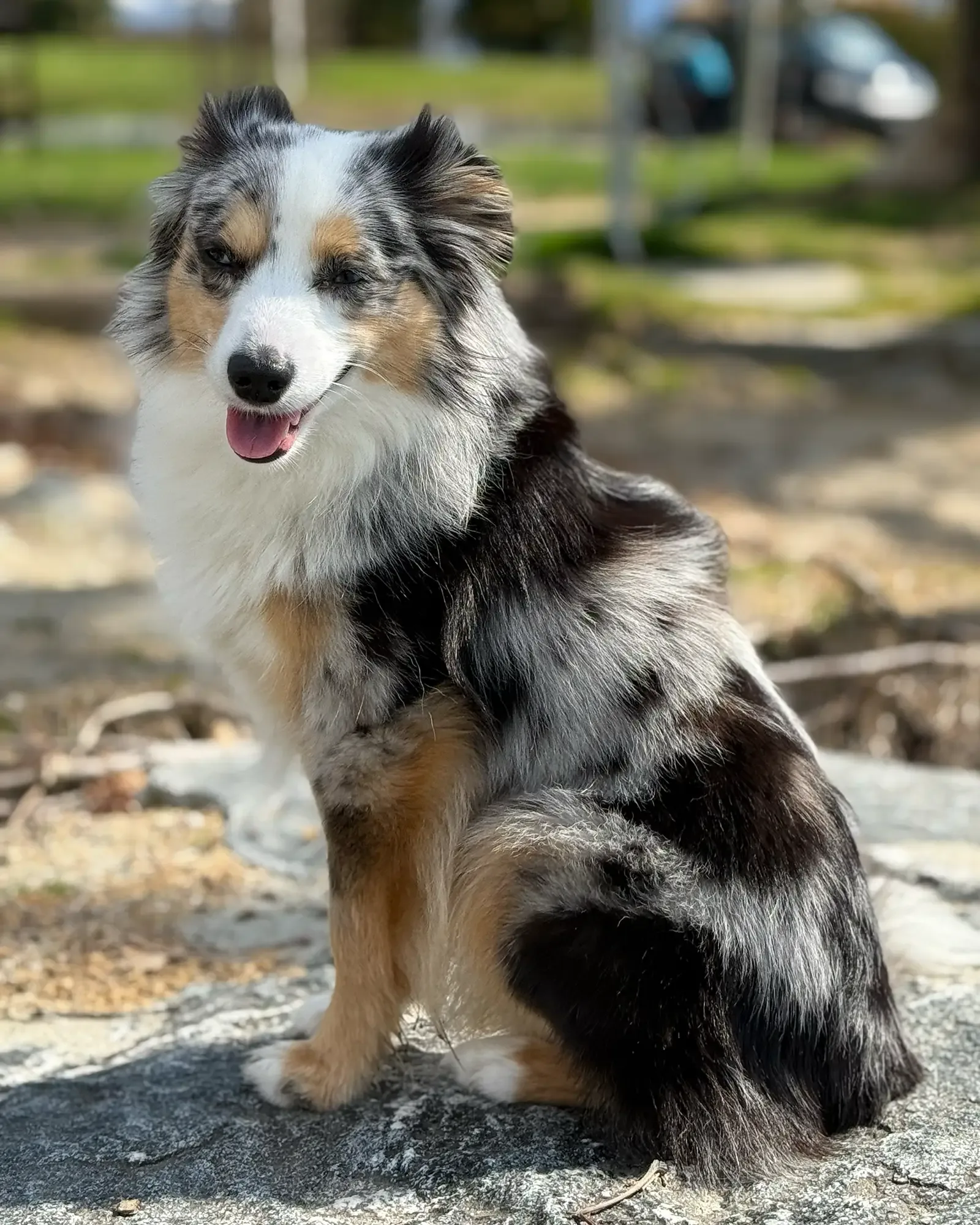
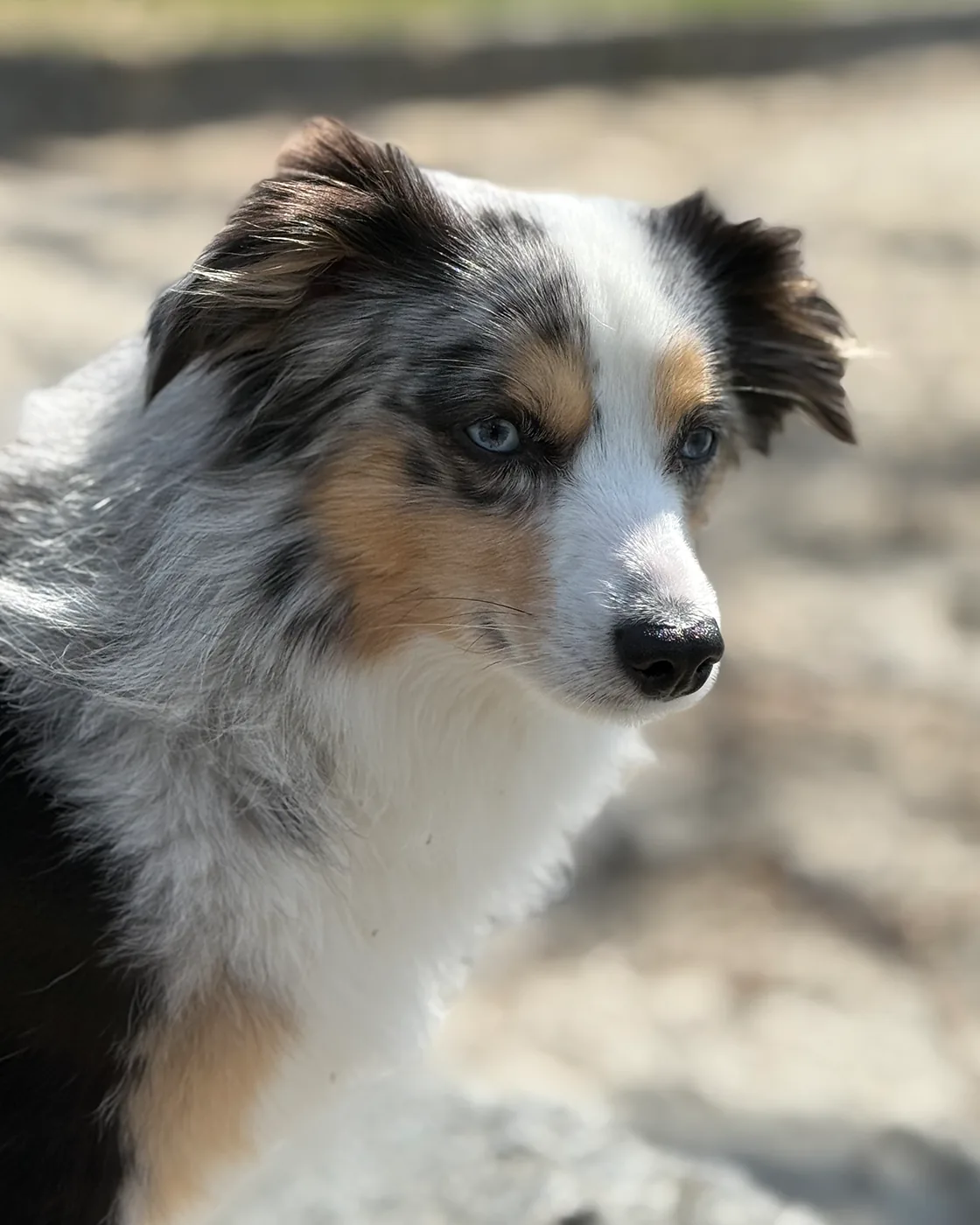
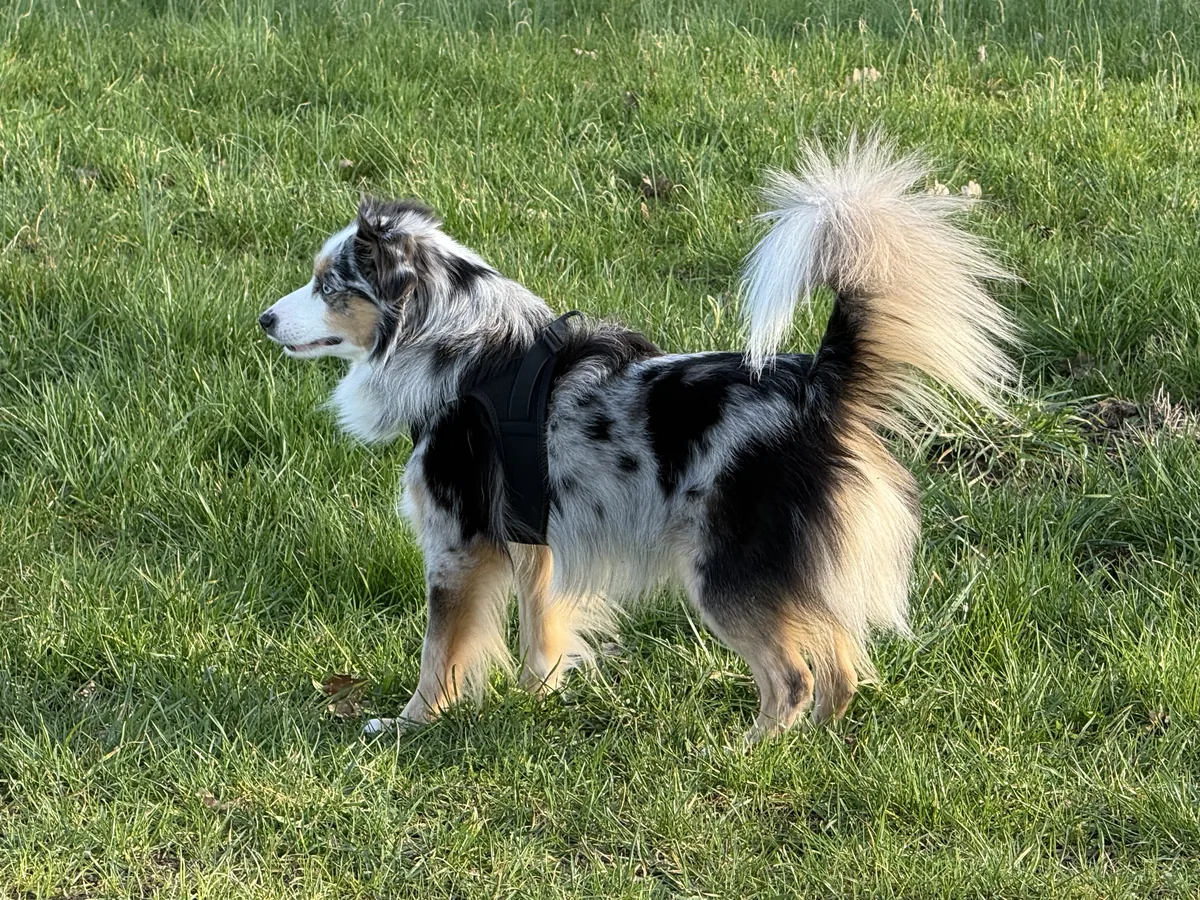
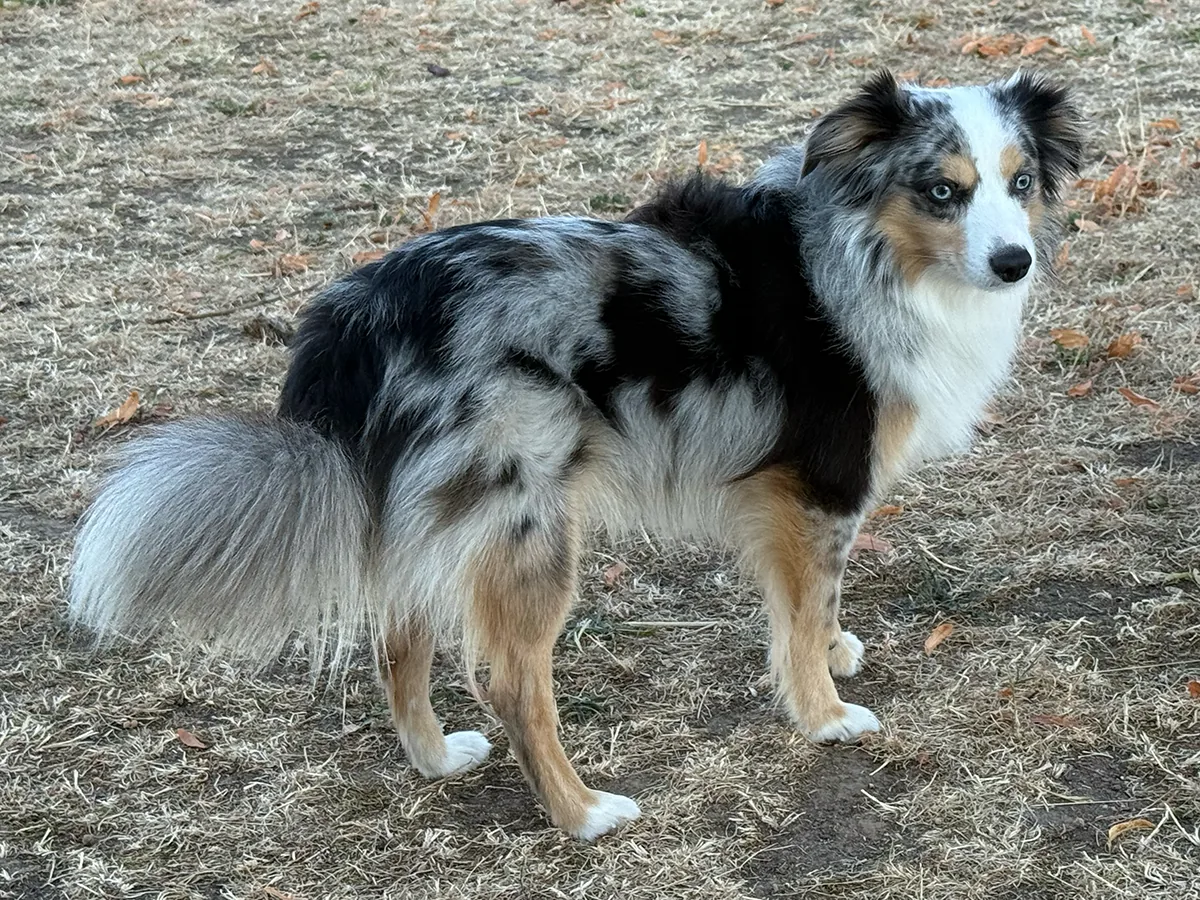
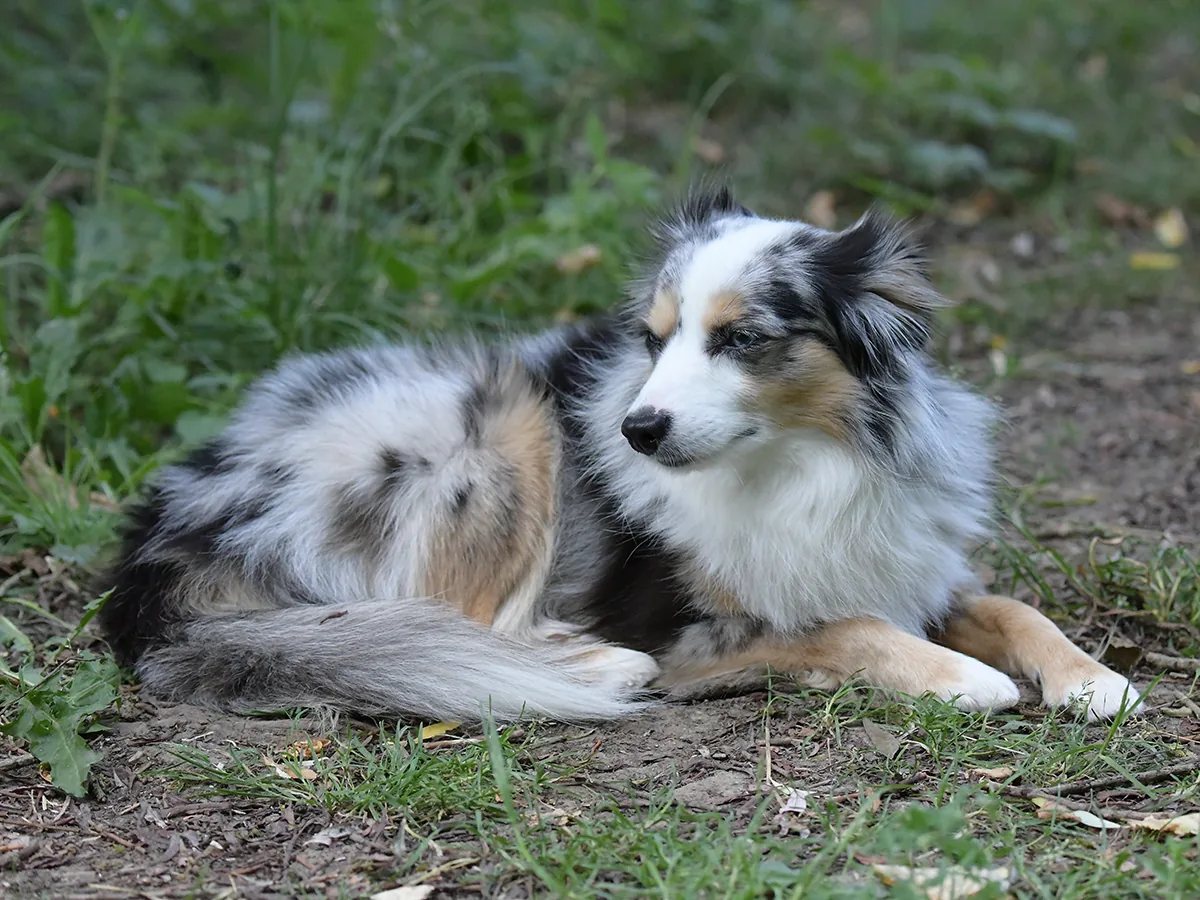
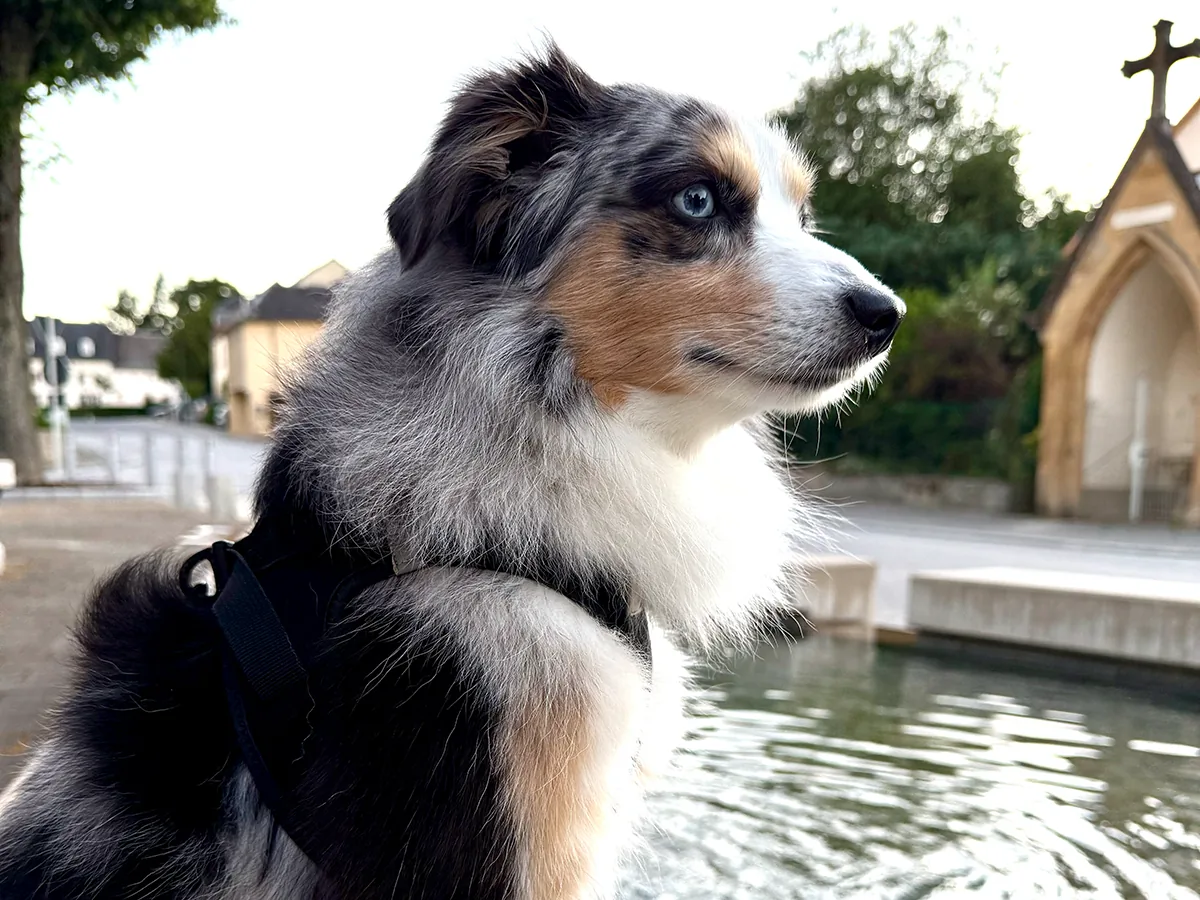
34.5 cm at the withers and 7 kg, placing him firmly in the toy range. Blue merle with copper and white markings, medium long coat, full tail. Both eyes are blue.
How he lives
Chase lives indoors as a full member of the family, never in a kennel. At present he is an only dog, a role he visibly enjoys because he never has to share the attention. There are no children in the household.
His home is in the countryside. Meadows and field tracks instead of traffic, space instead of confinement, and a daily routine that gives him the exercise a herding dog needs. That calm shows in him: Chase is attentive without being highly strung.
Pedigree
Ancestry
Registered with the American Stock Dog Registry, papers issued on 12 July 2022. Breeder: Linda Lauer. Chase has completed every examination required for breeding approval. The full pedigree is sent on request.
On the sire's side the ancestry reaches back to American kennels. For European breeding programmes this can open up a connection outside the lines commonly found here. The genomic diversity analysis shows heterozygosity above the breed average.
Sire
Sundown Valley’s Little Elvis
Grandsire
Lulu’s Lil Amazing Donald Duck
Granddam
My Circle K Farms Daisy Too Hughes
Dam
Feebee of colourful Fellows
Grandsire
Mystic Blue Moon of Alblers
Granddam
Colourful Fellow Jessy of Triple P
Progeny
Chase has been used at stud once. I do not have photographs of the litter.
Stud terms
What is required
- Pedigree from a recognised registry
- Valid breeding approval for the bitch
- Proof that the bitch is not merle
- Current health results, at least hips, elbows, patella, eyes, MDR1 and NAD
- Up to date vaccinations and worming
- Meeting in person before the mating
- Written stud agreement
How it works
Send an enquiry by email with the pedigree, health results and photographs of your bitch. If the match looks right, we meet in person. The date is then arranged around her season.
We are happy to travel to you. Chase stays in familiar surroundings that way, and your bitch is spared a long journey at a sensitive time. A visit to you is the rule here, not a concession.
I strongly recommend progesterone testing at your own vet. The right timing decides whether the journey is worthwhile and whether your bitch conceives at all. Two blood samples a few days apart are usually enough to narrow down ovulation.
Photos
Chase in pictures
Common questions
What breeders usually ask
What does my bitch need to qualify?
A pedigree from a recognised registry, valid breeding approval, current health results and proof that she is not merle.
Why are merle to merle matings ruled out?
Breeding two merle carriers can produce double merle puppies. These are frequently severely sight impaired or deaf. Chase is therefore only available to non merle bitches.
What does the genotype Mc235/M268 mean in practice?
At the M locus Chase carries two merle variants: the cryptic allele Mc235 and the classic allele M268. He has no wild type copy, so every offspring inherits one of the two. The cryptic allele rarely shows in the coat but is still passed on. The merle insertion is also unstable in length, so the allele length can change in the offspring. Anyone planning a mating should discuss this with their own breeding warden.
How large will the puppies be?
Adult size depends on both parents and on the wider pedigree. Chase measures 34.5 cm and weighs 7 kg, placing him firmly in the toy range. Adult size can never be guaranteed.
May I see the original certificates?
Yes. All findings are sent in full to serious enquirers: the radiographic report, the ophthalmologist certificate, the patella, dentition and testicle certificates, the genetic panel, the merle report, the diversity analysis, the DNA profile and the pedigree. The examining bodies are named in personal conversation.
Does Chase travel to the bitch, or does she come to him?
We are happy to travel to the bitch, and that is the rule here rather than the exception. Chase keeps to his usual routine, and your bitch avoids a long journey at a sensitive time. Travel costs and effort are taken into account when the stud fee is agreed.
What happens if the bitch does not conceive?
There are two options: a free repeat mating at her next season, or a partial refund of the stud fee. We decide together which suits better. The arrangement is set down in the stud agreement beforehand, so that nothing has to be negotiated if it comes to it.
Which languages can I write in?
English or German, whichever you prefer.